
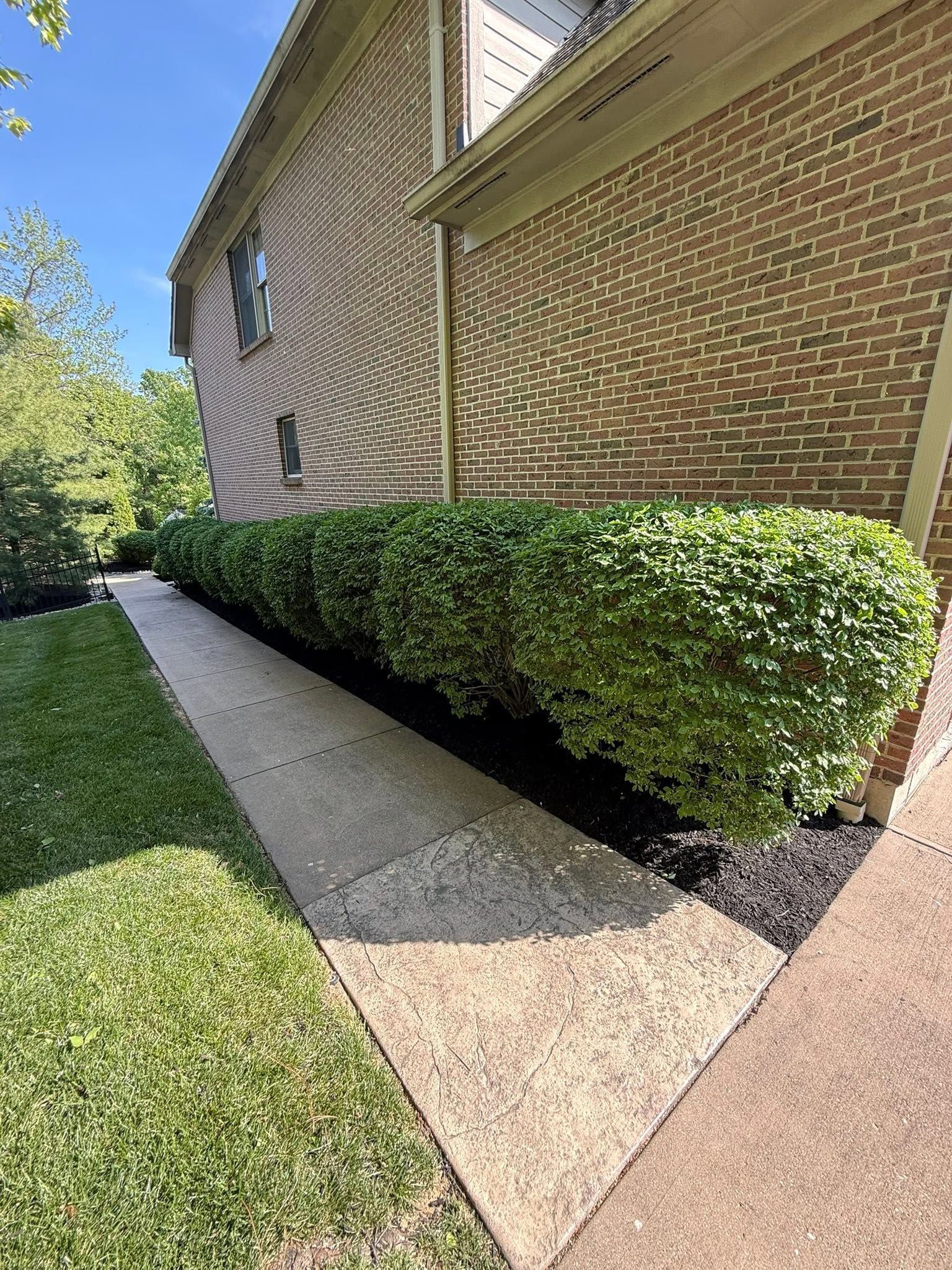
Trimming Scheduled Around Growth Surges
Hedge & Shrub Trimming in Sardinia for properties needing recurring cuts timed to spring growth and pre-winter hardening cycles
Hedges and shrubs respond to pruning timing more than pruning technique, because cuts made during active growth stimulate new shoots, while cuts made before dormancy allow plants to harden off without wasting energy on new growth that won't survive winter. Spring's growth surge and pre-winter hardening require trimming within narrow windows in Clermont County, where two productive weeks in spring and fall bracket optimal cutting periods before heat stress or freeze damage disrupt plant health. Yardly provides hedge and shrub trimming on recurring schedules across Indian Hill, Loveland, and Milford, with Michael or crew performing work as part of seasonal maintenance packages that integrate trimming with broader property care plans.
Scheduled trims happen on a seasonal basis rather than fixed calendar dates, so cuts align with when plants actually need shaping rather than when a generic schedule dictates service. Experience with pruning for plant health, not just appearance, ensures cuts promote dense growth without leaving stubs that invite disease or removing so much foliage that photosynthesis drops below what the plant needs to sustain roots.
Schedule a trimming evaluation to confirm seasonal timing and establish recurring service based on plant type and growth habit.
How Trimming Maintains Plant Structure
Each trim removes new growth that extends beyond the desired shape, cuts back stems to encourage branching, and eliminates dead or damaged wood that won't produce new foliage. Cuts get made just above growth nodes where new shoots will emerge, avoiding random cuts that leave bare sections or stimulate weak growth that won't support the plant's structure.
After trimming, hedges maintain defined lines without gaps or thin spots, shrubs hold their intended shape through the season without overgrowing walkways or windows, and plants develop denser foliage because pruning redirects energy into branching rather than vertical extension. The focus on plant health alongside appearance means trimming schedules adjust for species-specific growth rates and seasonal stress, so aggressive growers receive more frequent attention while slow-growing ornamentals get minimal intervention.
Trimming is offered as part of seasonal maintenance packages, with frequency determined by plant type and growth habit rather than a one-size-fits-all schedule. The service includes cutting and debris removal, but does not include fertilization, pest control, or plant replacement unless those are added as separate services based on plant condition.
Questions Before Starting Your Project
Property owners in Indian Hill and Loveland ask about trimming frequency, seasonal timing, and how pruning affects plant health before adding the service to their maintenance plan.
How often should hedges and shrubs be trimmed in Ohio?
Most hedges benefit from two to three trims per year, with spring cuts after initial growth surge, mid-summer shaping, and fall cuts before dormancy, though frequency varies by species and desired formality.
What happens if shrubs are trimmed too late in fall?
Late cuts stimulate new growth that won't harden off before freeze cycles arrive, leaving tender shoots vulnerable to winter damage and requiring corrective pruning the following spring to remove dead wood.
Why does pruning technique matter for plant health beyond appearance?
Cuts made in the wrong location leave stubs that rot and invite disease, while cuts made too far from growth nodes create bare sections that won't fill in, so technique determines whether plants thicken or decline over time.
How does trimming frequency change for fast-growing versus slow-growing shrubs in Sardinia?
Fast-growing species like privet or forsythia may need trimming every six to eight weeks during active growth to maintain shape, while slow-growing ornamentals like boxwood or holly require only seasonal attention to prevent overgrowth.
What should I expect after the first seasonal trim?
Plants look visibly neater with defined lines, and within a few weeks you'll notice denser growth where cuts were made, as branching increases in response to pruning and foliage fills in gaps.
Yardly schedules hedge and shrub trimming across Indian Hill, Loveland, and Milford based on plant growth cycles and seasonal windows rather than arbitrary calendar dates, ensuring cuts happen when they benefit plant health and appearance. Set up a property review to identify trimming needs and establish a recurring schedule suited to your landscape's specific plant types.