Water Management That Prevents Foundation Problems
Drainage Solutions in Sardinia for properties dealing with standing water, erosion, and clay soil saturation
Clay soils across Clermont and Brown Counties hold water instead of allowing it to percolate, creating pooling near foundations, erosion channels through landscaping, and saturated turf that remains unusable for days after rain. Yardly designs and installs drainage infrastructure to redirect water away from structures and manage seasonal runoff that overwhelms existing grading. Professional assessment identifies where water collects, why existing slopes fail to move it, and what subsurface or surface solutions are needed to prevent long-term damage.
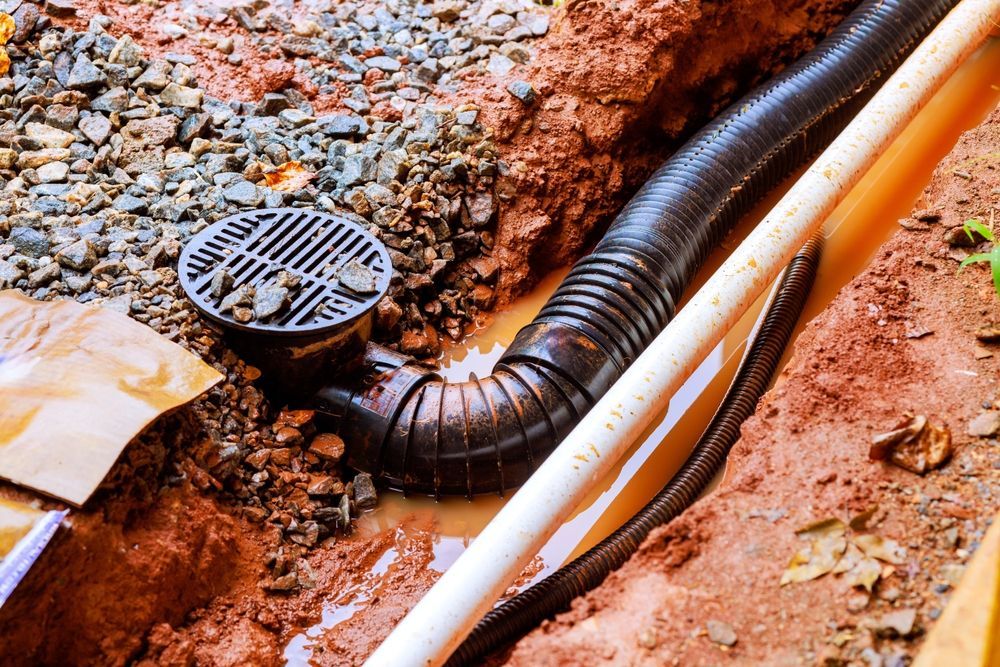
The process begins with site evaluation—walking the property during or immediately after rain to observe flow patterns, measuring existing grades with laser levels, and identifying low points where water terminates. Solutions range from regrading to adjust surface slopes, to installing French drains where subsurface flow is needed, to adding catch basins and channel drains where surface water needs immediate capture. Each approach depends on soil type, property layout, and how much water needs to be moved.
Arrange an on-site assessment to map water flow patterns and review drainage options specific to your property's grading and soil conditions.
How Drainage Infrastructure Addresses Regional Soil Conditions
Clay soils in this region create unique challenges—water doesn't infiltrate quickly, so surface saturation occurs even during moderate rainfall. Solutions must account for this by either moving water across the surface to a discharge point or capturing it in subsurface drains surrounded by gravel that provides temporary storage while water slowly percolates. French drains are excavated trenches filled with gravel and perforated pipe, installed along foundation perimeters or in low-lying areas where water collects. Surface grading adjustments change slope direction to move water toward swales or storm drains rather than letting it pool.
After installation, you notice standing water no longer appears in previously saturated areas, foundation perimeters remain dry even after heavy rain, and erosion channels stop forming through mulch beds and turf. The yard becomes usable sooner after rain because water is either moving across improved grades or draining into subsurface infrastructure instead of sitting on the surface. Gutters downspouts are often extended or tied into the drainage system to prevent concentrated discharge from overwhelming nearby areas.
Permit compliance is required for projects that alter stormwater flow or involve excavation near property lines, and structural knowledge is necessary to avoid grading changes that create new problems on adjacent properties. The work integrates with hardscaping projects where retaining walls or patio installations require proper drainage design to prevent water from undermining structural elements.
Common Questions About This Service
Homeowners evaluating drainage solutions typically want to understand what the work involves and how it addresses their specific water problems.
What determines whether surface or subsurface drainage is needed?
Surface solutions work when water can be redirected across existing grades to a discharge point—swales, storm drains, or lower areas away from structures. Subsurface drains are necessary when surface water has no viable path, when clay soils prevent infiltration, or when water needs to be captured below grade to prevent foundation saturation. Site evaluation determines which approach fits the property layout and soil conditions.
How do French drains function in heavy clay soils?
French drains in clay soils rely on gravel surrounding the perforated pipe to provide temporary storage—water enters the gravel bed faster than it can percolate into surrounding clay, allowing the system to handle peak flow without backing up. The pipe then conveys water to a discharge point rather than depending on soil infiltration. This differs from sandy soils where infiltration is the primary mechanism.
What happens to water after it enters the drainage system?
Water collected by subsurface drains or surface channels is routed to a discharge point—typically a lower area of the property, a municipal storm drain, or a dry well where it can slowly infiltrate away from structures. The discharge location is identified during site assessment and must comply with local stormwater regulations to avoid redirecting problems onto neighboring properties.
How does drainage work affect existing landscaping?
Excavation for French drains or regrading work temporarily disrupts turf and planting beds. Yardly coordinates drainage installation with landscape restoration, replanting disturbed areas and reestablishing grades to match surrounding terrain. Mulch beds may need replenishment, and sod or seed is used to restore turf in trenched areas once compaction is complete.
When is drainage work typically scheduled in Sardinia and surrounding areas?
Drainage projects are best completed during dry periods when soil conditions allow excavation and grading equipment can access the site without causing additional compaction. Spring and fall wet periods in Clermont County often reveal drainage problems, but installation usually waits for drier summer or late fall windows. Winter work is avoided due to frozen ground and equipment limitations.
Yardly brings structural knowledge and regional soil expertise to drainage projects across Indian Hill, Loveland, and Batavia service areas. Request a site assessment to identify water flow issues and develop a drainage design that prevents foundation damage and landscape erosion.